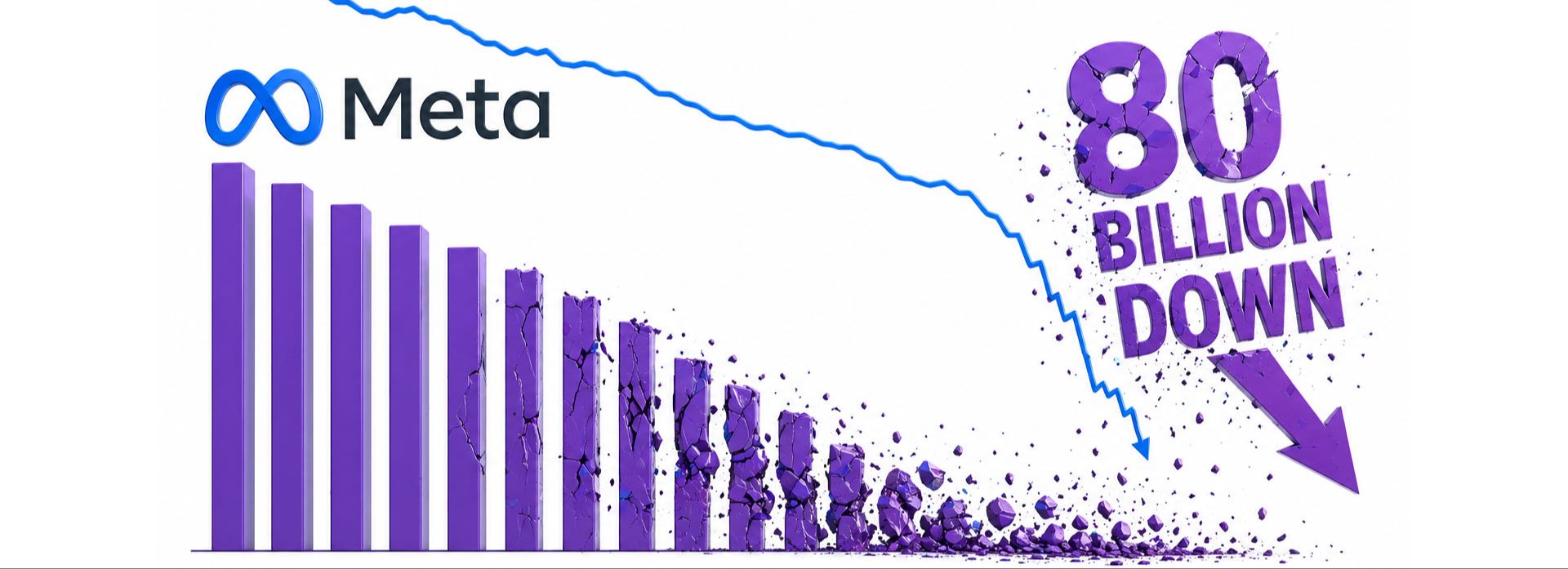

There’s been a strange hangover from the whole metaverse moment. When Meta started pouring vast amounts of money into Horizon Worlds, the story became bigger than the technology itself. It was positioned as the future of everything—work, social life, identity, commerce. So when the numbers came back and the losses stacked up, the conclusion many people jumped to was simple: VR doesn’t work. But that conclusion doesn’t really hold up, because it mixes together things that were never the same to begin with. The metaverse was a cultural and economic idea. VR as a medium is just a piece of technology. And tools like Gravity Sketch sit in a completely different space again—they’re not trying to replace reality or build a new internet, they’re just trying to help people design things better.
We’ve seen this kind of confusion before. Second Life was once talked about in almost identical terms. It was going to be the next version of the internet, a place where everything would happen. It didn’t turn out that way but it didn’t mean online worlds were pointless. It just meant that particular vision was overblown. What’s happening now feels very similar. The metaverse hasn’t really died—it’s just settled back into being niche, instead of pretending to be universal.

Gravity Sketch was never really part of that world in the first place. It belongs to a much more grounded tradition of tools that solve specific problems. In the same way Photoshop didn’t need a cultural revolution to justify itself, or ZBrush didn’t rely on hype to become industry standard, Gravity Sketch earns its place by being useful. It lets designers work in space in a way that feels natural, sketching in three dimensions rather than constantly translating ideas through flat screens and orthographic views. That alone changes how quickly ideas can form and evolve.
What’s interesting is that the collapse of the metaverse narrative has actually made this clearer. When all the noise dies down, you’re left with the practical question: does this tool help you do your job better? For a lot of designers, the answer with VR modelling is still yes It reduces friction at the early stages of design, where most of the important decisions are made. It allows for a kind of immediacy that’s hard to replicate with a mouse and keyboard. And crucially, it doesn’t try to replace existing workflows—it fits into them. You can sketch something in VR, export it, refine it elsewhere, and carry on as normal.
The hardware side of things will keep shifting. Headsets will get lighter, cheaper, or replaced by something else entirely. But the core idea—working directly in three-dimensional space—isn’t going anywhere. If anything, it’s starting to influence other tools outside of VR as well. You can already see echoes of it in tablet workflows and early AR applications. That suggests this isn’t a dead end, just an early stage. The mistake was assuming that VR needed to be a destination. The metaverse tried to turn it into a place you live in. Tools like Gravity Sketch treat it as something much simpler: a way of working. And that’s a much more sustainable idea. Most technologies that last aren’t the ones that try to replace everything overnight. They’re the ones that quietly slot into existing practices and make them better.
So the more honest way to look at it is this: VR didn’t fail. The Metaverse hype did. Once you separate those two things, it becomes much easier to see why tools like Gravity Sketch are still relevant—because they were never really tied to that hype in the first place.